| QuickStop Tire
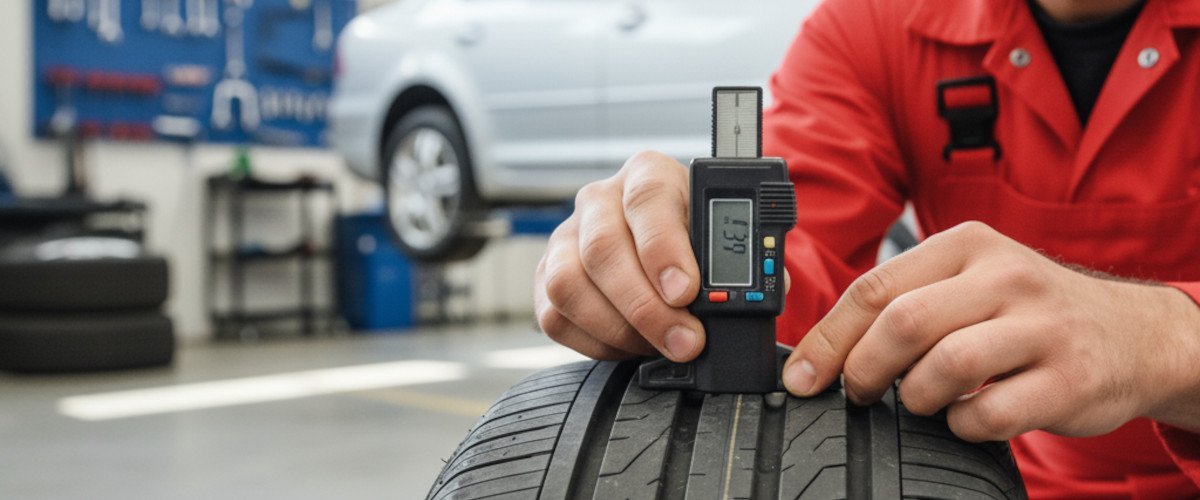
Tread depth affects how well your tires grip on wet, slushy and snowy roads and how quickly you can stop. Here is how to measure it and when to replace your tires.
What is Tread Depth?
Tread depth is the measurement from the top of the tread to the bottom of the tread grooves, in millimetres or 32nds of an inch. New tires typically have about 8 to 9.5 mm (10/32" to 12/32") of tread. Transport Canada says a tire must be replaced when its tread is worn to the wear bars, at 1.5 mm (2/32"), and recommends replacing tires before that point for the best grip in rain and snow.
How to Measure Tread Depth
There are several ways to measure tire tread depth:
- Tread Depth Gauge: The most accurate method using a specialized tool
- Toonie Test: Push a toonie into the tread at the most worn spot with the polar bear facing up (paws toward the tread). If the tread covers the silver outer ring completely, the tire is roughly half worn; if the tread only reaches about halfway up the lower letters on the silver ring, it's time to replace the tire
- Tread Wear Indicators: Tires have built-in wear bars, usually six around the tire, that become flush with the tread when it is worn to 1.5 mm (2/32")
Why Tread Depth Matters
Proper tread depth is essential for several reasons:
- Wet Weather Traction: Tread channels water away from the tire contact patch
- Snow and Ice Performance: Deeper tread provides better grip in winter conditions
- Hydroplaning: Deeper tread reduces the risk of hydroplaning on wet roads
- Braking Distance: Worn tires significantly increase stopping distances
- Handling and Stability: Proper tread maintains vehicle control and stability
When to Replace Your Tires
Replace your tires when:
- The tread is worn down to the wear bars (1.5 mm, 2/32") on any tire
- Winter tires are worn close to 4 mm (5/32"), which Transport Canada says is too little for snow-covered roads
- You notice uneven wear patterns
- Tires show signs of damage, cracking, or bulging
- The rubber shows cracks from age or weather
Checking for Uneven Wear
Inspect your tires regularly for uneven wear patterns, which can indicate alignment issues, improper inflation, or suspension problems. Common wear patterns include:
- Centre Wear: Overinflation
- Edge Wear: Underinflation
- Cupping: Suspension or balance issues
- Feathering: Alignment problems
Seasonal Considerations
In Ottawa, winter and all-season tires need different limits. Transport Canada advises not to use tires worn close to 4 mm (5/32") on snow-covered roads, and any tire must be replaced at the wear bars (1.5 mm, 2/32"). Check all-season tires more often in wet weather.
At QuickStop Tire Ottawa, we check tread wear with every tire rotation, and we can measure your tread and advise you on when to replace your tires. When it's time, search our new tire finder.
Sources: Transport Canada: Riding on Air; Transport Canada: Using winter tires; The Globe and Mail: the toonie tread test.
Author

Tire and auto service shop at 8 Cedarow Ct, Stittsville. Questions about your tires? Call 613-800-8854.