| QuickStop Tire
Incorrect tire pressure leads to uneven tire wear, poorer handling, higher fuel use and, in the worst case, tire failure. Here is how to find the right pressure for your vehicle, check it and adjust it.
Why Tire Pressure Matters
Proper tire pressure keeps the right amount of tread in contact with the road. Underinflated tires create more rolling resistance and use more fuel, while overinflated tires reduce traction and can cause uneven wear. Both affect your vehicle's handling and safety.
Finding the Correct Pressure
Your vehicle's recommended tire pressure is printed on its tire information label, usually on the edge of the driver's door or the door post, the glove box or the fuel door, and in the owner's manual. It's given in kPa and psi, and it's specific to your vehicle. Don't use the pressure on the tire sidewall: that is the pressure needed to carry the tire's maximum load, not the recommended pressure for your vehicle.
How to Check Tire Pressure
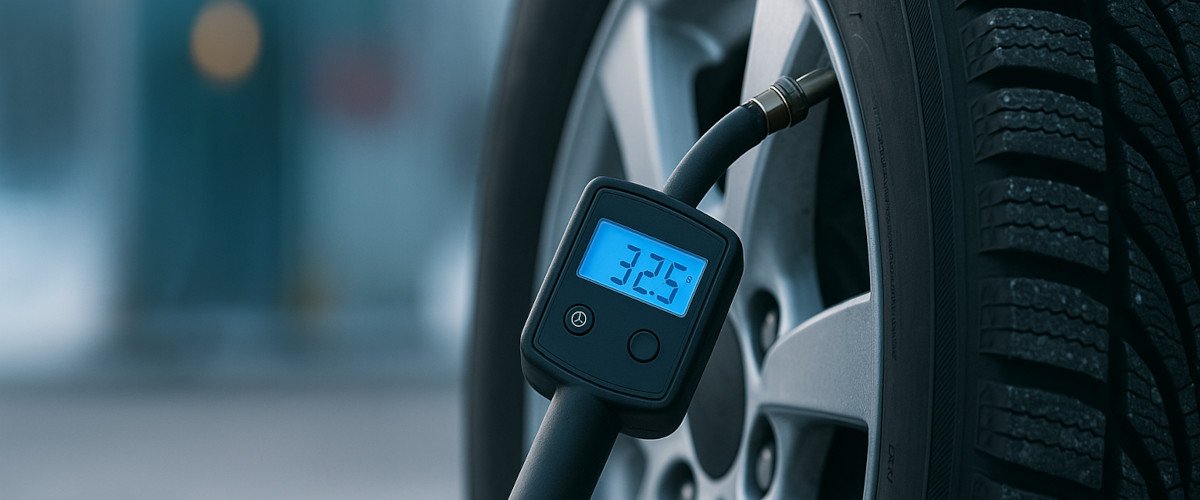
Check your tire pressure when the tires are cold, before driving or after the vehicle has sat for a few hours. Use a good-quality gauge; Transport Canada notes that gauges from automotive supply stores are generally more accurate than those on gas station air pumps. Remove the valve cap, press the gauge firmly onto the valve stem, and read the pressure. Check all four tires plus your spare.
When to Check Pressure
Transport Canada recommends checking your tires, including the spare, at least once a month and before long trips. Tires lose about 7 kPa (1 psi) for every 5°C drop in temperature, and about 14 kPa (2 psi) a month on their own as air seeps through the rubber. That matters in Ottawa, where temperatures swing widely between seasons.
TPMS (Tire Pressure Monitoring System)
Many vehicles have a tire pressure monitoring system (TPMS) that warns you when a tire is low. Some systems warn only when a tire is already significantly underinflated, and Transport Canada notes that TPMS does not replace monthly checks with a gauge. If the warning comes on, check your pressure as soon as possible.
Adding or Releasing Air
If your tires are underinflated, add air using a compressor at a gas station or with a portable air compressor. If overinflated, release air by pressing the centre pin in the valve stem with a small tool. Always recheck the pressure after adjusting to ensure accuracy.
At QuickStop Tire Ottawa, we set the air pressure with every tire change and wheel balancing, and we can check it during a free tire inspection. See our tire services.
Sources: Transport Canada: Riding on Air.
Author

Tire and auto service shop at 8 Cedarow Ct, Stittsville. Questions about your tires? Call 613-800-8854.