| QuickStop Tire
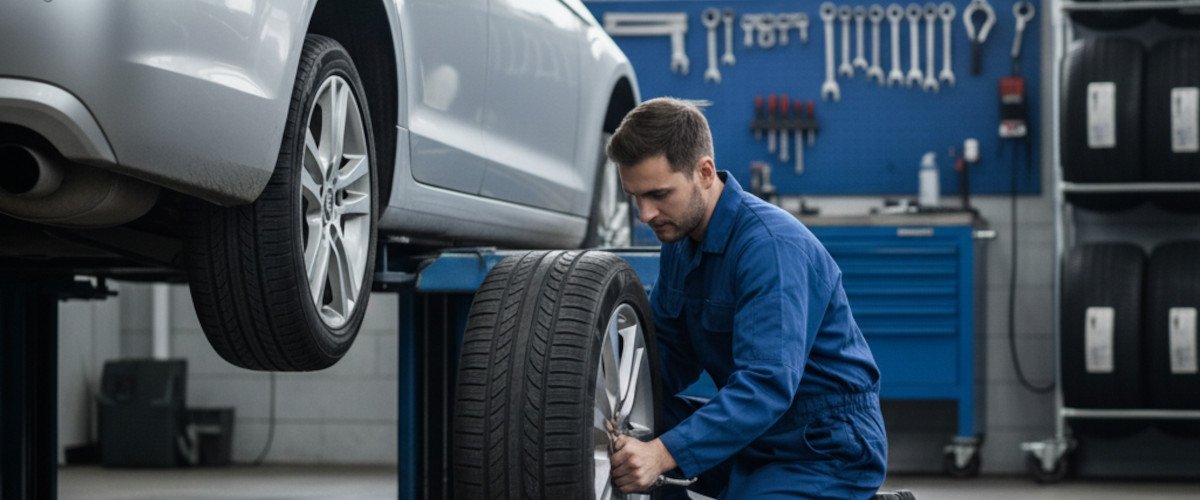
Rotating your tires moves each one to a different position on the vehicle so they wear evenly and last longer.
Why Rotate Your Tires?
Different positions on your vehicle experience different wear patterns. Front tires typically wear faster on the edges due to steering forces, while rear tires may wear more evenly. By rotating tires regularly, you ensure that all tires experience different positions over time, leading to more uniform wear and longer tire life.
When to Rotate Your Tires
Rotate your tires as your vehicle's owner's manual recommends; Transport Canada notes that common practice is about every 10,000 km. Some vehicles need more frequent rotation because of driving conditions or tire type. Signs that you need a rotation include uneven wear patterns or your vehicle pulling to one side.
Rotation Patterns
The rotation pattern depends on your vehicle type and tire configuration:
- Front-Wheel Drive: Move front tires straight back, rear tires to front and cross them
- Rear-Wheel Drive: Move rear tires straight forward, front tires to rear and cross them
- All-Wheel Drive: Cross all four tires (front to rear, rear to front)
- Directional Tires: Only rotate front to rear on the same side
What to Check During Rotation
A rotation is a good time to inspect your tires: check for uneven wear, damage, proper inflation and tread depth. It's also a good time to have your wheels balanced and the alignment checked if needed.
Benefits of Regular Rotation
Regular tire rotation provides several benefits: longer tire life, more consistent handling and traction, less road noise from uneven wear, and early detection of potential issues. It's a simple maintenance task that saves money by getting the full life out of your tires.
Professional vs. DIY Rotation
Tire rotation can be done at home with the proper tools and knowledge. A shop will also torque the wheels to the manufacturer's specification and check the tires while the wheels are off.
At QuickStop Tire Ottawa, we rotate tires in the pattern your vehicle's manufacturer specifies, check the tread wear and torque the wheels to spec. Call us for a quote, or see our tire rotation page.
Sources: Transport Canada: Riding on Air.
Author

Tire and auto service shop at 8 Cedarow Ct, Stittsville. Questions about your tires? Call 613-800-8854.